
The power of micro‑victories in autism
When your autistic child’s routine seems stuck, it’s natural to feel like nothing is working. You try strategies, adjust schedules, change approaches… and still, the day feels heavy. But there’s a type of progress that almost no one notices — and it can completely transform the way you see your child’s development: Micro‑victories.
These micro‑victories are too small to ease your exhaustion today… but big enough to create the progress that will ease your exhaustion in the future.
What are micro‑victories?
Affiliate Disclosure: This post contains Amazon affiliate links. As an Amazon Associate, I earn from qualifying purchases at no extra cost to you. Thank you for supporting Your Parenting Blueprint.
Micro‑victories are discreet, quiet, almost invisible advances. They don’t show up as “tasks completed,” but as signs that your child is building emotional and practical autonomy.
They are moments like:
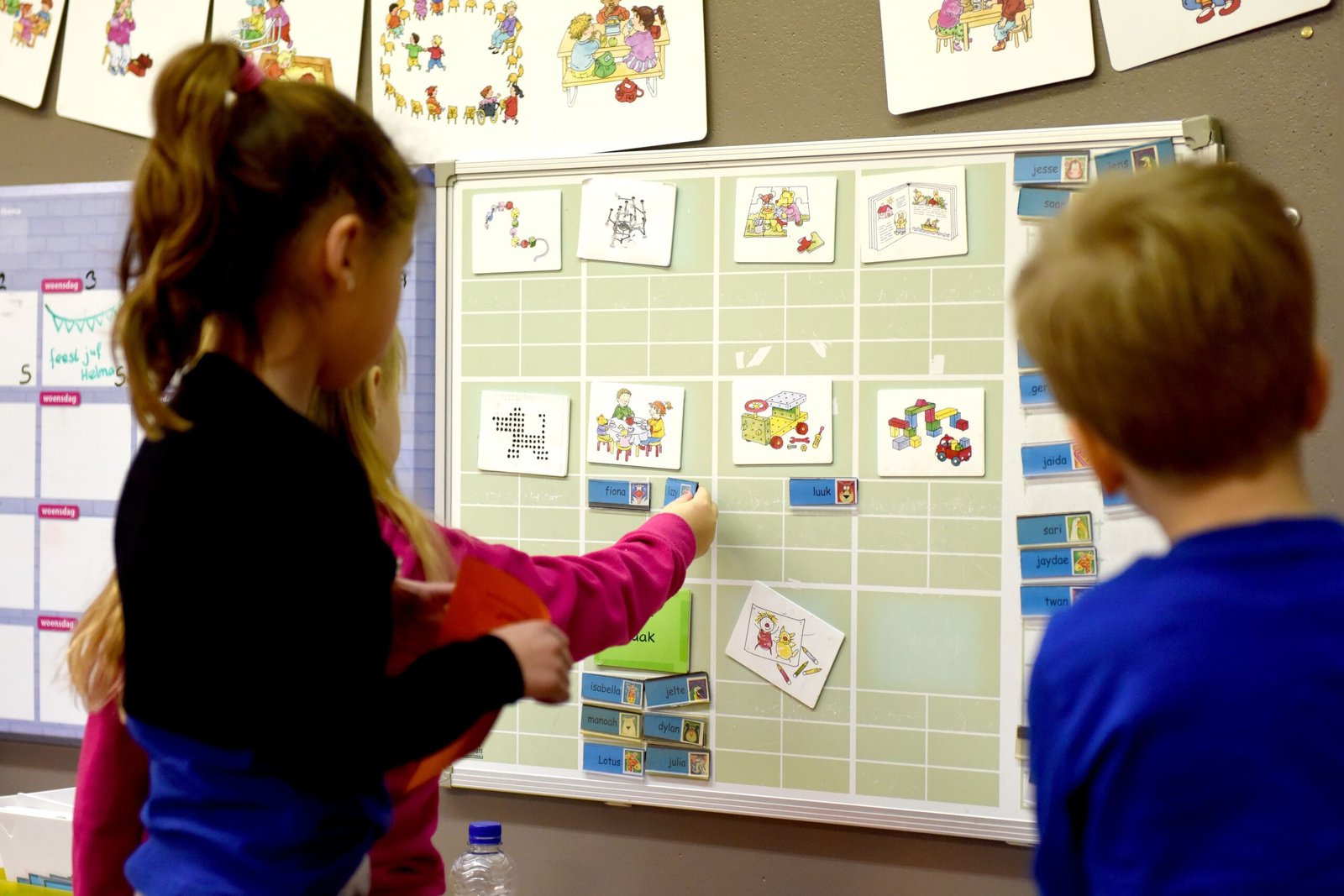
• Accepting the visual card — even if they don’t complete the entire task.
• Doing a single step without resistance — like wetting their hands or putting an object away.
• Transitioning with less anxiety — even if they still need support.
• Needing a reminder instead of full help — a clear sign of evolution.
These moments seem too small to celebrate… but they’re exactly what builds the path toward lighter days.
Why micro‑victories matter so much in autism
Micro‑victories work because they respect the way neurodivergent children learn:
• They reduce sensory overload by breaking big tasks into small parts;
• They decrease anxiety by creating predictability;
• They strengthen emotional safety because each small success reinforces “I can do it”;
• They build real autonomy because progress happens in layers — not in leaps.
The invisible impact on your exhaustion
Here’s the part almost no one talks about: micro‑victories don’t ease your fatigue today… but they ease your fatigue in the future.
Because each small achievement:
• Reduces the number of crises over the months;
• Decreases resistance during transitions;
• Increases the predictability of the routine;
• Creates more moments of calm;
• Gives you more space to breathe.
What feels minimal now is exactly what builds a lighter routine later on.
How to start noticing micro‑victories in daily life
• Observe the process, not just the result
• Break tasks into smaller steps
• Record small changes
• Celebrate what used to go unnoticed
The celebration doesn’t need to be big. It can be a smile, a “I saw that,” a gentle touch, a positive reinforcement. What matters is recognizing it — because recognition leads to repetition.
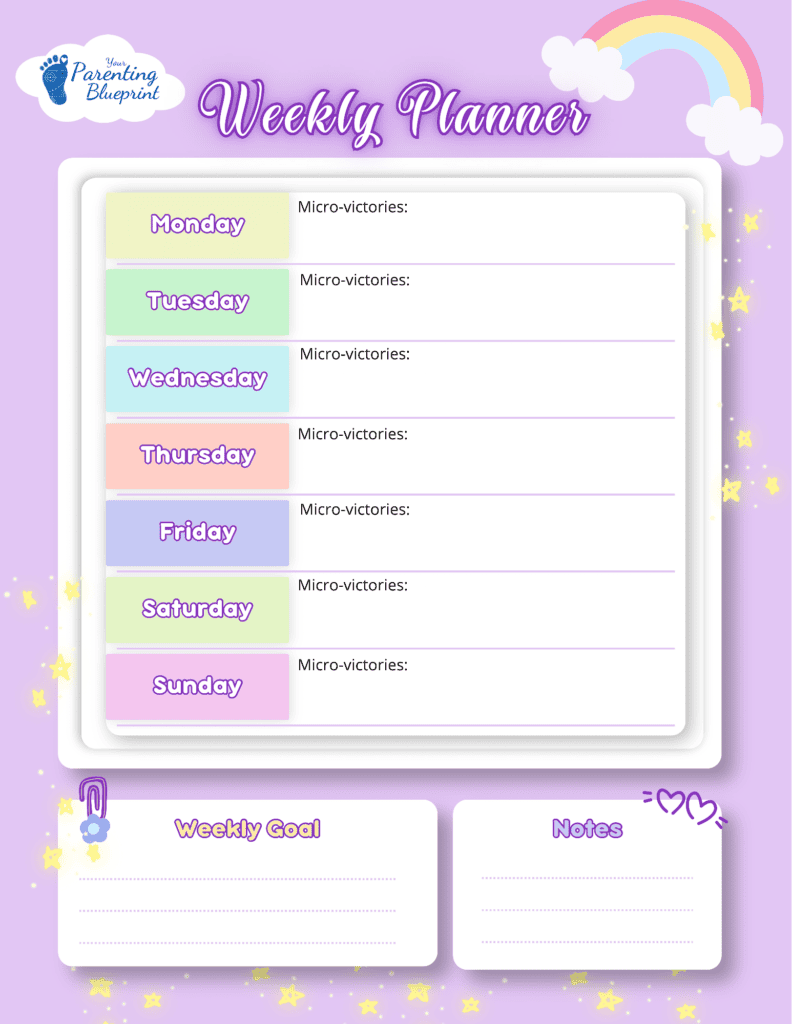
Conclusion: progress doesn’t need to be big to be real. Here is a weekly planner you can use to track your progress towards a goal. Best wishes of success!
Micro‑victories are the kind of progress that doesn’t show up in reports, doesn’t become a developmental milestone, and doesn’t get attention on social media. But they’re what build your child’s autonomy. They’re what transform the routine. They’re what ease your exhaustion in the future.
< Download Planner for free