We had someone cleaning the pool that day. Nicholas was wandering around the house as usual, up
and down the stairs. The kitchen door was unlocked to let him enjoy the yard. I finished preparing lunch and saw the pool guy leaving as I called the kids for lunch.
My daughter came running downstairs, but Nicholas didn’t. I called once more, then asked my daughter to fetch him. She came back downstairs telling me he wasn’t up there — my heart sank, because I couldn’t find him downstairs either.
Then it hit me: he must be outside. Then it hit me again — the pool guy! Did he lock the gate? He hadn’t. Nicholas was out! I told my husband. He picked up the keys, jumped in the car, and drove. We don’t have water around our home, so the next risk would be a busy road.
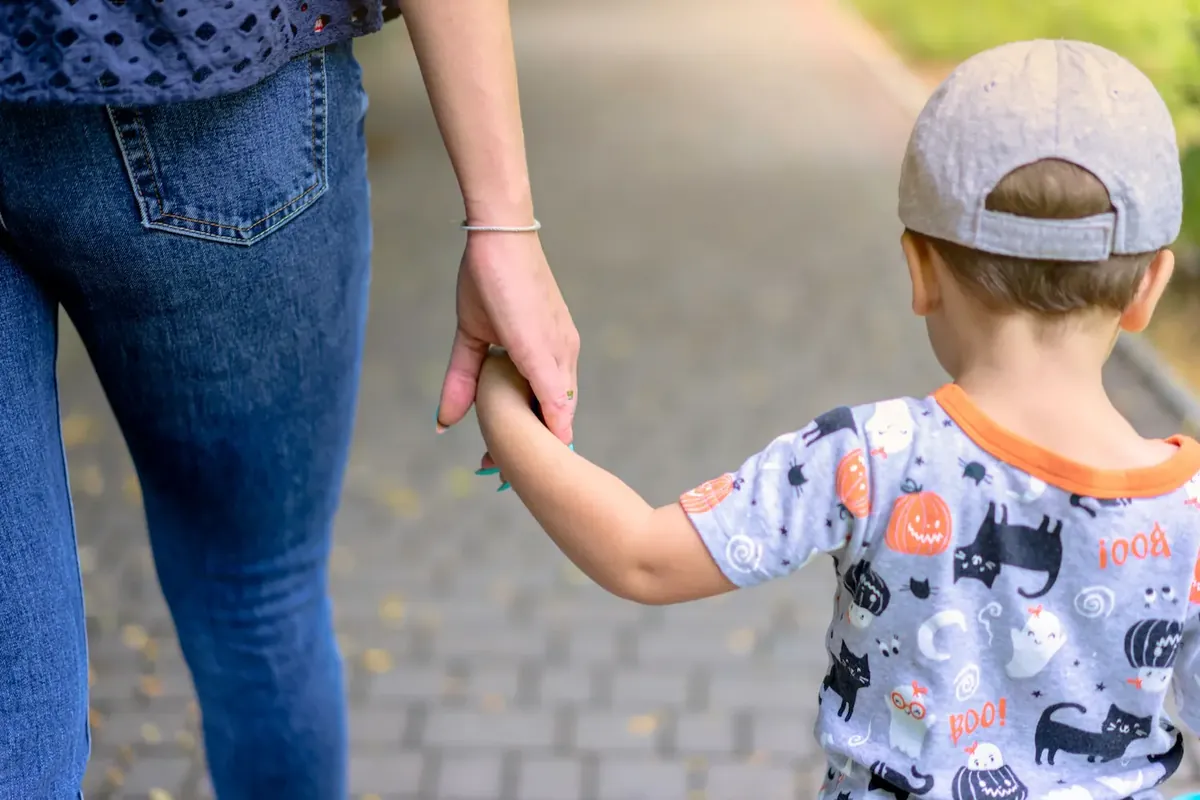
I called the police — he is registered with the ‘Take Me Home’ program. Then I called the neighborhood security and the neighbors. Nicholas has a bracelet because he can’t explain things. Eventually, my husband found him in front of someone’s house. The police were already there.
If you’re raising an autistic child, you probably know this fear. It’s not a one-time scare — it lives in the back of your mind every single day. Here’s what I’ve learned, mom to mom, about keeping our kids safe.
1. Children seeking calm who can’t communicate are more likely to elope.
Elopement isn’t “running away.” It’s when a child leaves a safe space — home, school, the yard — without permission. And for autistic kids, it’s rarely defiance.
Nicholas doesn’t elope because he’s angry. He elopes because something pulls him — a sound, a light, water, or just the need to move when his body feels overwhelmed. He can’t always tell me “I need a break,” so his feet say it instead.
Once I understood that, I stopped seeing it as a behavior problem and started seeing it as a safety problem. That changed everything about how I prepared.
2. Small changes to your home will provide calm, boundaries and safety – add a calm zone, alarms, locks and signs
You don’t need to turn your home into a fortress. But you do need layers, because autistic kids are incredibly resourceful — Nicholas has figured out every “childproof” thing we’ve ever bought.
What actually works in our house:
- A keypad lock on the front door. This is the single most important thing we did. Since installing it, we have had zero elopements through the front door. Not one. It’s weatherproof, he can’t figure out the code, and I sleep at night. If you do one thing from this list, do this.
- Door alarms on every other exit — the back door, the garage. Cheap, loud, and they buy you seconds.
- Visual stop signs on doors. Simple red signs at his eye level. It won’t stop a determined kid alone, but it’s one more layer.
- A calm zone — a corner with his sensory tools, weighted blanket, and low light. Somewhere he wants to go when he’s overwhelmed, instead of out the door.
Don’t rely on height or “he won’t figure it out.” He will. Get the keypad lock.
3. Have your child registered as a vulnerable person with the
local police
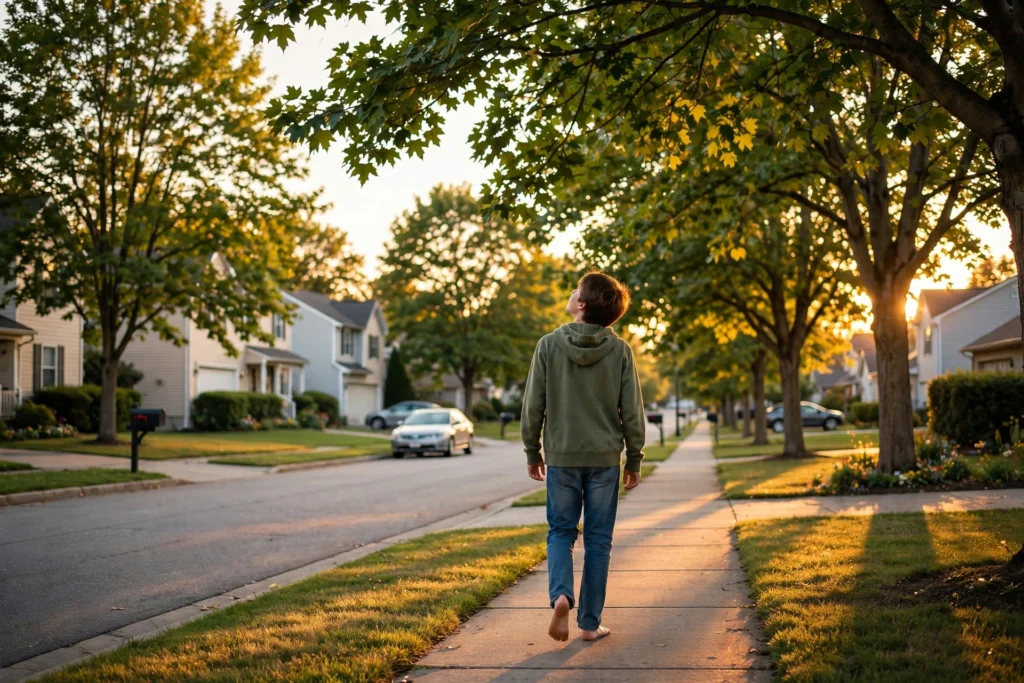
This was hard for me at first. Registering my son with the police felt like labeling him. But here’s what changed my mind: if Nicholas ever wanders and someone finds him, I want the person with the badge to know how to help — not to shout commands at a terrified autistic teenager.
What to share with your local department: his name, age, and a recent photo; how he communicates (or doesn’t); what calms him and what triggers him; places he’s drawn to; your phone number.
Call the non-emergency number and ask about a “special needs registry” or “autism safety program.” Most departments will take your information even if they don’t have a formal program. It takes twenty minutes and it could save his life.
4. Always check water first
If your child elopes, check water first. Ponds, pools, creeks, bathtubs.
Water draws autistic children — the shimmer, the sound, the sensory input. And drowning is the leading cause of death when autistic kids wander. I don’t say that to terrify you. I say it because in those first panicked minutes, your instincts will tell you to run down the street. Don’t. Check the water closest to you first.
5. Call for help immediately
Don’t wait. Don’t think “he’ll come back” or “I’ll find him myself.” Call 911 and call your neighbors at the same time.
I know the shame that comes with it — the fear that people will judge you, that they’ll think you’re a bad parent. Forget them. Minutes matter more than pride. Every minute you wait is a minute he’s further away.
Keep a recent photo of your child on your phone, always. When you call, you can send it instantly.
6. A ID bracelet will help neighbors or the police to identify your child in case she finds a way out
Nicholas has worn his ID bracelet for over five years. Every single day.
If he wanders and can’t tell someone his name — or won’t respond because he’s overwhelmed — that bracelet speaks for him. It has his name, that he’s autistic, and my phone number. A neighbor who finds him doesn’t have to guess. A police officer doesn’t have to shout.
Don’t buy the cute ones. He’ll take them off. The exact bracelet Nicholas has worn — it’s the only one that’s stayed on. Durable, secure, comfortable enough that he forgets it’s there. I wasted money on three other brands before I found this one.
This tiny bracelet is his voice when he can’t use his own.
You are not failing
Elopement doesn’t mean you’re a bad parent. It means your child communicates with their feet when words aren’t available. It means you love a kid whose brain works differently, and you’re doing the brave work of keeping them safe in a world that wasn’t built for them.
Prepare. Register. Lock the doors. Get the bracelet. Check the water first.
And give yourself grace. You’re doing the hardest job there is.
If there's a topic you'd like me to write about, share it in the comments — or contact me. I'd love to hear from you.