

It’s Communication
When a child melts down, refuses to cooperate, shuts down, or lashes out, it’s easy for the world to label it as “bad behavior.” But here’s the truth — the one that changes everything:
Your child’s behavior isn’t bad. Your child is communicating.
Behavior is the language kids use when they don’t yet have the words, regulation skills, or emotional capacity to express what’s happening inside them. And when you begin to see behavior as communication, everything shifts — your response, your confidence, your compassion, and your connection with your child.
Behavior Is a Message, Not a Moral Failure
Children don’t wake up thinking, “I’m going to make today difficult.” They wake up with needs — sensory needs, emotional needs, physical needs, developmental needs — and behavior is how those needs show up on the outside.
Some of the most common “behavior” messages include:
- I’m overwhelmed
- I’m scared or unsure
- My body feels uncomfortable
- I don’t understand what’s happening
- This is too much for me
- I need connection, not correction
- I’m trying, but I can’t do this right now
📌 When you see the message behind the moment, you stop reacting to the behavior and start responding to the need.
What Your Child Might Be Communicating
1. Sensory Overload
Bright lights, loud noises, crowded spaces, scratchy clothes, strong smells — these can overwhelm a child’s nervous system, especially autistic or sensory-sensitive kids.
Behavior might look like:

- Covering ears
- Running away
- Meltdowns
- Refusing to participate
But the message is: “My body can’t handle this environment.”
2. Emotional Overwhelm
Kids feel big emotions with small tools. When they don’t know how to regulate, they communicate through behavior.
Behavior might look like:
- Yelling
- Crying
- Throwing things
- Shutting down
The message is: “I don’t know how to calm myself. I need help.”
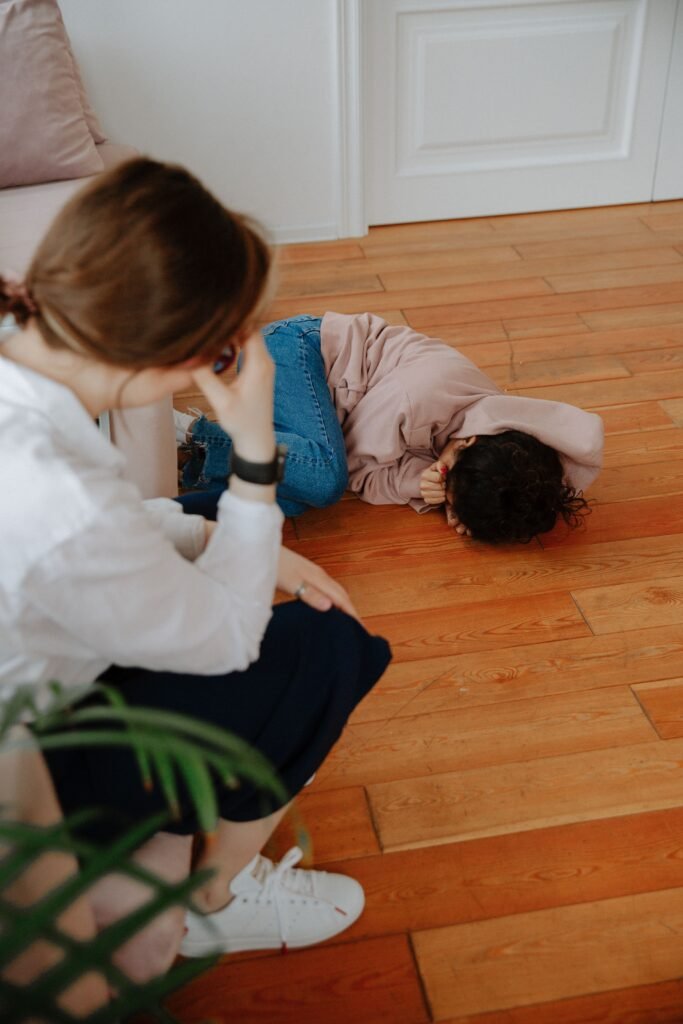
3. Communication Frustration
When a child can’t express what they need, want, or feel, frustration spills out through behavior.
Behavior might look like:
- Refusing
- Pushing
- Screaming
- “Acting out”
The message is: “I’m trying to tell you something, but I don’t have the words.”
4. Physical Discomfort
Constipation, bloating, hunger, fatigue, illness — these all show up as behavior long before a child can explain them.
Behavior might look like:
- Irritability
- Clinginess
- Avoidance
- Sudden outbursts
The message is: “My body doesn’t feel right.”
5. Need for Connection
Sometimes behavior is simply a child reaching for you.
Behavior might look like:
- Interrupting
- Whining
- Following you around
- “Acting younger”
The message is: “I need closeness. I need you.”

What Changes When You See Behavior Differently
When you stop labeling behavior as “bad,” you stop seeing your child as a problem to fix — and start seeing them as a person to understand.
You become:
- calmer
- more confident
- less reactive
- more connected
- more compassionate
And your child becomes:
- safer
- more regulated
- more understood
- more willing to cooperate
- more connected to you
A Simple Reframe to Use Every Day
When behavior shows up, ask yourself:
📌 What is my child trying to communicate right now?
This one question shifts you from frustration to curiosity, from reaction to connection, from conflict to understanding.

You’re Not Alone in This
If your child’s behavior feels confusing, overwhelming, or exhausting, you’re not failing — you’re learning a new language. And your child is learning right alongside you.
You’re doing the brave work of seeing beneath the surface. You’re doing the gentle work of responding to needs instead of reacting to moments. You’re doing the loving work of raising a child who feels understood.
And that is never “bad.” That is beautiful.