
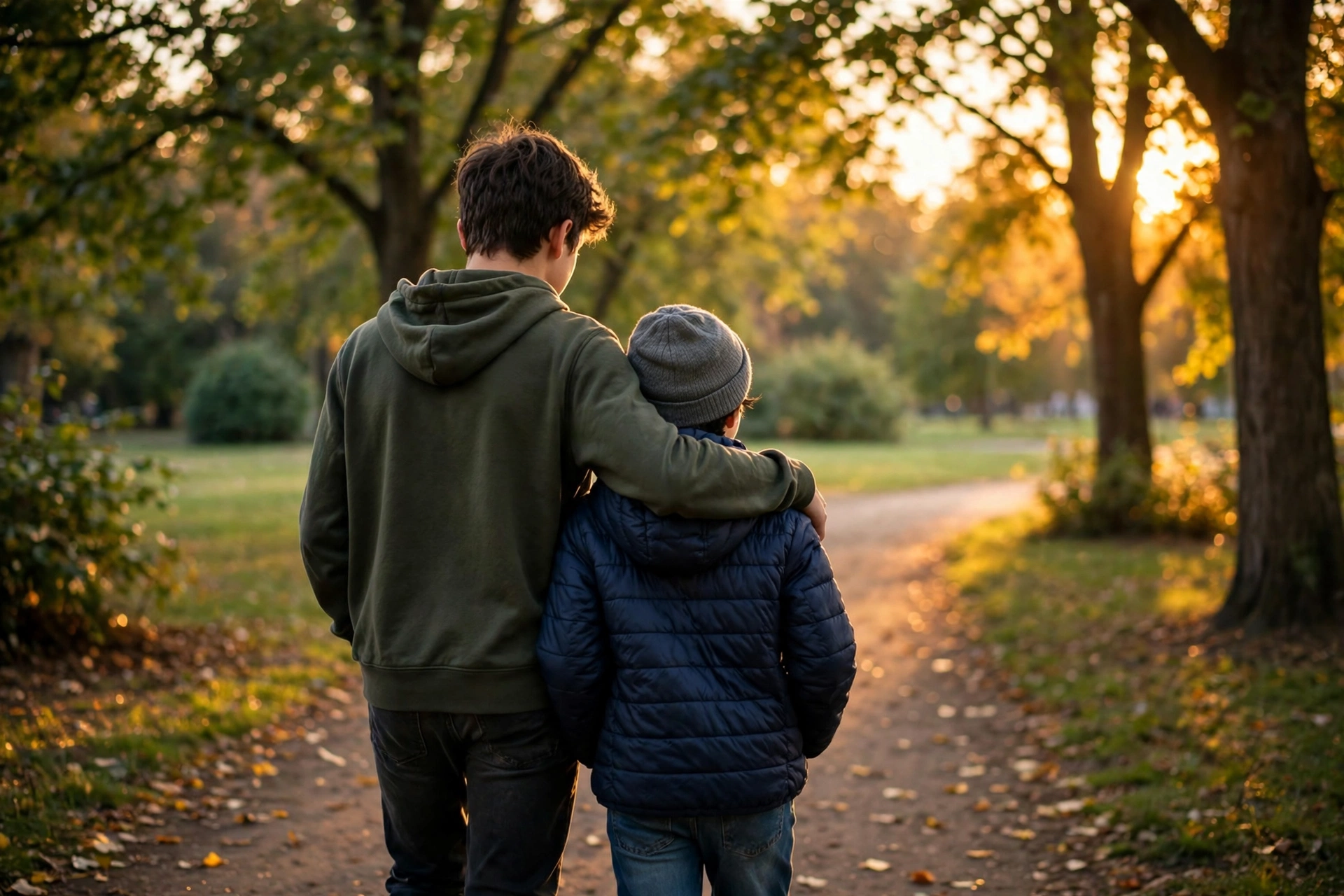
Since Nicholas was born, Mateus never left his side.
Mateus is my oldest — hyperactive from the start, bouncing off the walls while Nicholas was quiet as a whisper. Back then we didn’t know Mateus had ADHD. Honestly, if you’d asked us which of our boys would end up with a neurological condition, we’d have pointed at Mateus without hesitating. Life had other plans.
As Nicholas grew, the gap between him and his school peers widened. Friends drifted away, one by one, until the only friend he had left was his brother.
And Mateus? He never treated that like a burden. He was always trying to make Nicholas laugh — pulling faces, being silly, asking him to copy everything he did. They used to steal my tablet and make videos of themselves. I’d be in the kitchen and hear them giggling down the hall, and I’d just stand there for a minute, listening. Those were some of the best sounds in our house.
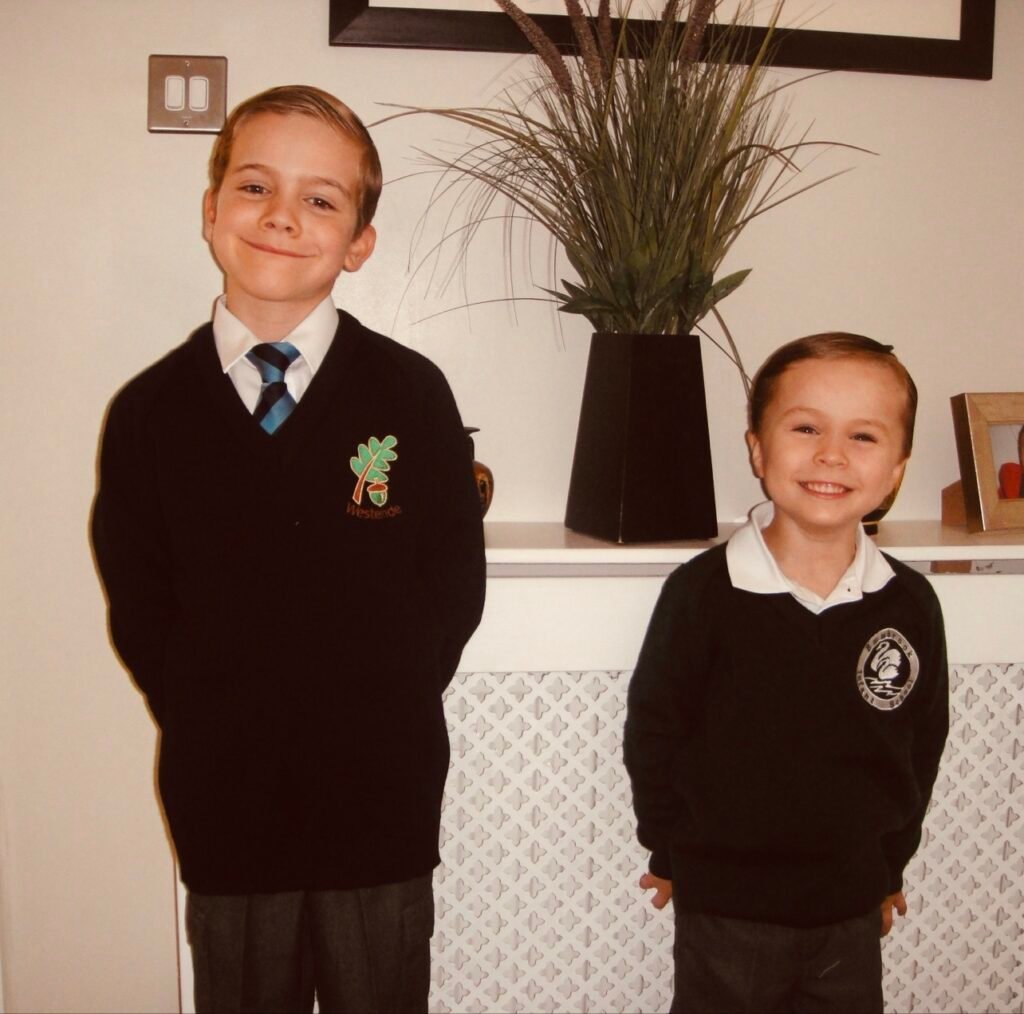
Now Mateus is in college, and the house feels different when he’s gone. Nicholas likes to lie down on his brother’s bed and play with his things — I think it makes him feel close to him. And when Mateus walks through that door? Nicholas lights up. You can see it in his whole body. The family is complete again, and he feels it.
People talk a lot about what siblings of special-needs kids sacrifice. They don’t talk enough about what they become.
Mateus learned patience before he had a name for it. He learned to read his brother — to know when Nicholas needed space and when he needed someone to be ridiculous until he laughed. Nobody taught him that. He just… did it, because that’s what big brothers do when they love someone.
And my daughter — she’s claimed her place in our busy family too. Mateus is her favorite; she absolutely loves her big brothers. All three of them have their own unique personalities, their own way of fitting into this loud, complicated, beautiful thing we call family.
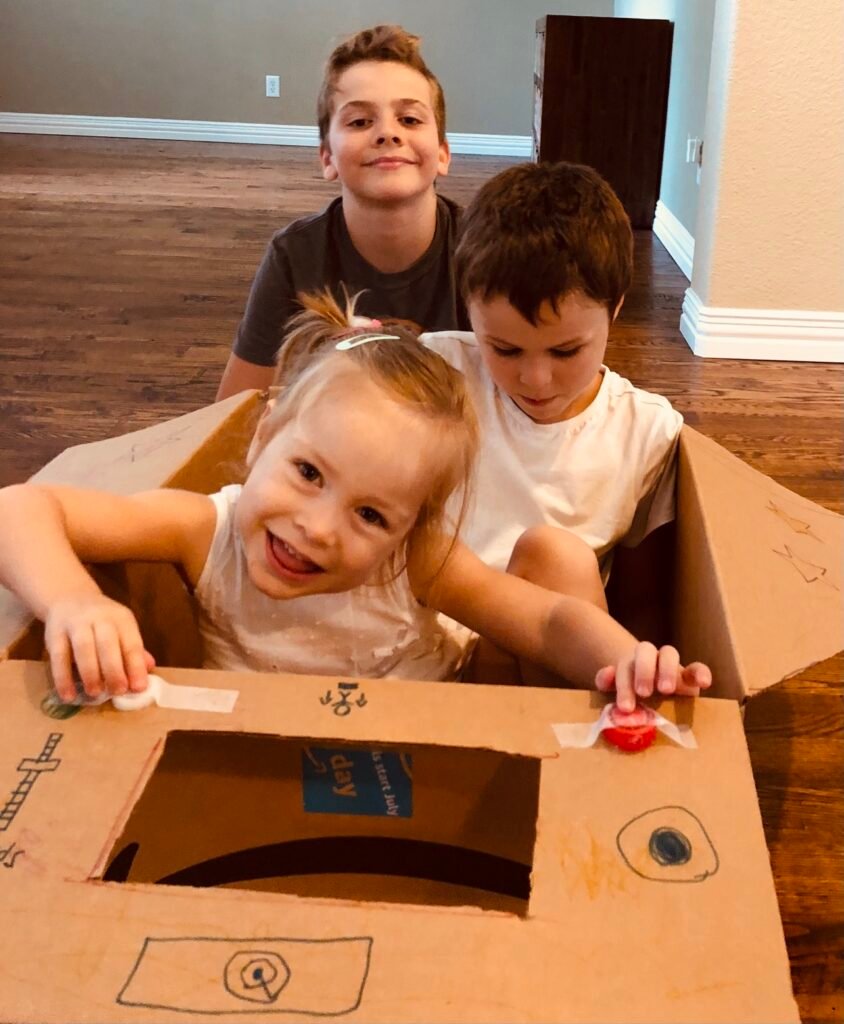
I’m not going to pretend it’s always easy for them. There were days my daughter waited — waited while I handled a meltdown, waited while I was on the phone with a therapist, waited while Nicholas needed me first. She’s been waiting since she was a baby in her playpen. Every time I ask her to wait now, it hits me: she’s still just a little girl, giving up another moment with me so her brother can have what he needs.
They feel things they don’t always say out loud. The pride when Nicholas does something that took him months to learn. The frustration when plans change because Nicholas can’t cope. The loneliness of having a family that looks different from everyone else’s. The pressure to be the easy one.
If you’re raising a neurodivergent child and you have other kids, here’s what I want you to know: they see everything. And they’re becoming someone extraordinary because of it — not in spite of it.
Give them their moments. Ten minutes of just you and them, no agenda. Let them be frustrated without making them feel guilty for it. Let them be kids — silly, loud, selfish sometimes — because they are kids, not little caregivers.
And tell them this, because they need to hear it: you matter. Your feelings matter. Your childhood matters. You are so deeply loved — even on the days when it feels like there’s nothing left of me to give.
The bond between my boys is the most stabilizing thing in Nicholas’s life. Mateus was his first friend, his translator, his safe person. And now, watching my daughter find her own place among her brothers, I realize something: these siblings aren’t just supporting characters in Nicholas’s story.
They have their own story. And it’s a beautiful one.
If there's a topic you'd like me to write about, share it in the comments — or contact me. I'd love to hear from you.