
As a parent, you know your child better than anyone. You can feel when something in their body or behavior is just… off. Not in a dramatic way, but in that quiet, persistent way that keeps tapping you on the shoulder. Maybe it’s their energy. Maybe it’s their mood. Maybe it’s the way their body struggles to regulate itself. You can’t always explain it, but you feel it.
And when you reach that point, you don’t need a complicated plan or a list of overwhelming rules. You need something simple — something doable — that fits into your already demanding life.
For many families, one of the easiest places to start is with small nutritional shifts. Not a full diet overhaul. Not a restrictive plan. Just tiny additions that support your child’s energy, digestion, and overall regulation.

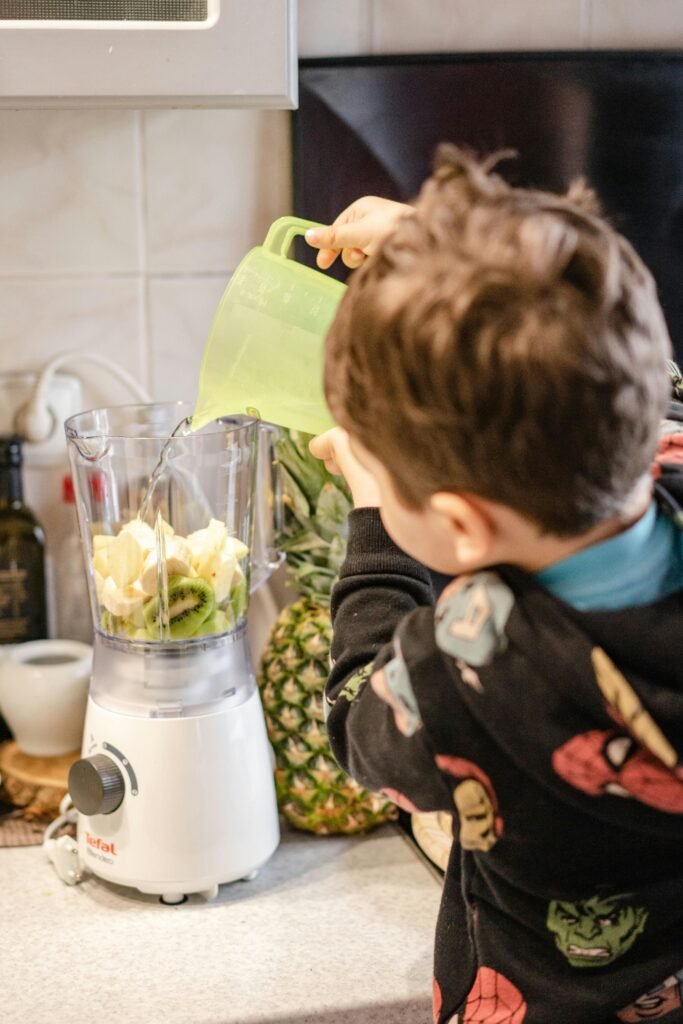
One of the simplest tools is a shake — a blend of fruits and vegetables that can be adjusted to your child’s sensory needs. Some kids jump right in. Others want nothing to do with it. And if your child resists, that doesn’t mean the idea won’t work for you. It just means they need a different approach.
Some children, especially those with sensory or developmental differences, learn best by watching or getting involved on the making. They study the world quietly before stepping into it. For these kids, modeling can be more powerful than pressure.
When they see someone else enjoying something — a sibling, a parent, a friend — curiosity often does the work for you. And when they step into it to help, they will slowly drop the sensory barriers. And what do you do meanwhile? Just be kind to yourself, you are doing the best you can! Stay steady and don’t feel discouraged.

And when they finally take that first sip, even if it’s tiny, that’s progress. A sip today can turn into a full glass by the end of the week.
What matters most is this: tiny, consistent changes can create real transformation.
Not because they fix everything overnight, but because they honor who your child is and how they learn. Sometimes the biggest shifts come from the smallest steps — a calmer afternoon, a steadier mood, a body that feels just a little lighter.
And you deserve to feel proud of yourself for noticing, for trying, and for trusting the slow path. These small steps — yours and your child’s — are the foundation of growth. They’re proof that meaningful change often begins quietly, with one simple choice that makes life just a little easier.

If you’re in a season where everything feels heavy or complicated, start small. Start gentle. Start with one thing that feels doable today. You might be surprised by how far a tiny shift can take you!